The 7 Books Every Food Business Owner Should Read (2026)

Ask people what matters most in a food business and you'll get a long list. Tight costings. Smart revenue split. Good suppliers. Beautiful food. All of it is true, to some extent.
We believe the most important thing is something else entirely: the constant growth of the person running the business. The owner. You. A food business can only grow as far as the people running it grow. So the real work - the work that everything else rests on - is actually learning. Reading. Listening. Growing. Finding a mentor. Attending a training program (hint, hint).
Getting a little better every single day, for the rest of your working life. Rocket science, no. But it is the real secret to success. Do you have a hunger to learn? Sit with that question for a moment.
Here's how we explain it in our training program. Imagine you own a Ferrari. A beautiful, high-performance machine. To keep it fast, you put in good fuel, yes? You service it. You keep it clean. You protect it, because you know what it's capable of.
You are the Ferrari. If you want a high-performing business, you need to be a high-performing person. And that starts with intentionally training and maintaining yourself - through books, podcasts, audiobooks, courses, and surrounding yourself with smart, experienced mentors.
So here are the seven books we think every food business owner should start with. Read them in the order we have written for the best experience. Don't just read them; reflect on them, make notes, share the message with others, and teach the concepts until you completely understand them. Re-read them often (our Managing Director has read 2 Second Lean over a dozen times and still learns something new each read).
You might be surprised by the choice of books, but we've intentionally put this list together, because each book teaches a skill that will outlast any single recipe, costing, or menu.
Here's the list — and don't worry, almost every one of these comes as an audiobook, so you can "read" them in the car, at the markets, or while you prep:
1. 2 Second Lean —P. Akers
2. The E-Myth Revisited — M. Gerber
3. How to Win Friends and Influence People — D. Carnegie
4. Banish Sloppiness — P. Akers
5. Good to Great — J. Collins
6. Getting Things Done — D. Allen
7. Traction — G. Wickman

1. 2 Second Lean — Paul Akers
2 Second Lean is a book about attitude, building good teams, and most of all, learning to see waste - the problem every food business owner is at war with, whether they know it or not.
It teaches a profound Japanese concept called Kaizen, which sits at the heart of any good food business. Kaizen means continuously improving everything in small, steady, disciplined steps. Not one big dramatic change every few weeks. Tiny adjustments, every day, that make your work easier, faster, and better over time. Small rocks build a mountain... that's the whole point.
If you ever feel frustrated, busy, tired, and stretched too thin, wondering why nobody puts the spatula back where it belongs, or why you spend all day reacting instead of getting ahead - this is the most important book in your toolkit. It's also short, easy to read, and has been translated into many different languages.
Ayano, from our Cohort 4, runs The Takoyaki Bakery. After reading 2 Second Lean, she changed one habit: she stopped baking lots of extras (the 'just in case' goods). Before, she'd make far more than she needed, then store it, try to remember what she had, and pay for freezer space - all without actually saving any prep time. Now she bakes only what she'll use that week. Is that $20 book not worth its weight in gold already? Less waste, less storage, less cost, and one less thing to keep track of.
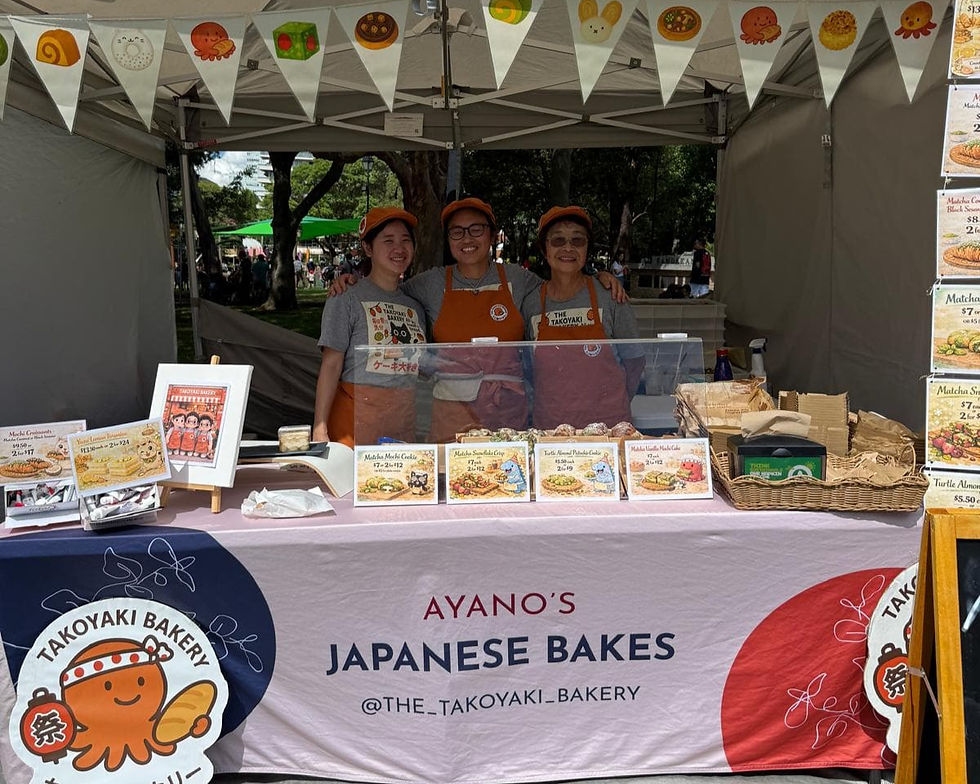
One other great thing about this book is that it is so simple to read that it makes improvement fun. That's what business should be - fun! Why not share the book with your own employees and learn how to develop a culture of constant improvement together?
Listen instead: Paul gives away a free video-book version of 2 Second Lean on YouTube — and on the 'Lean Play' app there are audio translations in many languages — so you can take it in on your commute.
Main idea: Stop complaining about everyone else: see one piece of waste today in your business that you cause, and fix it. Then do the same tomorrow. And make it fun.
2. The E-Myth Revisited — Michael Gerber
Have you ever heard the idea that a business is a system of systems? Or the warning that if you can't step away from it, you don't own a business - you own a job?
The E-Myth explains the difference between the two beautifully. It says every owner carries three people inside them: the entrepreneur, who dreams big and chases a vision; the manager, who builds order and process; and the technician, the one who's great with their hands - the cook.
Most home cooks and chefs who start food businesses are brilliant technicians. The trouble starts when the technician runs the whole show. Gerber uses a bakery as his example all the way through, which makes it perfect for food businesses. It teaches you to build something that runs on systems and repeats reliably - instead of running on chaos and your own exhaustion.
Listen instead: yes, there's an audiobook - a good one for the commute.
Main idea: Work on your business, not just in it - build systems so it can run without you standing over it.
3. How to Win Friends and Influence People — Dale Carnegie
At FoodLab, we teach that the most important person in your business is your customer. They pay the bills. They pay for your new oven. They pay for your holiday.
How to Win Friends and Influence People teaches you to be genuinely curious about the people you serve - and to speak to them in a way that makes them understand, and love, what you're doing. It's not a book about manipulation, by the way, it's an important book about understanding people.
You spend a lot of your time leading people: staff, suppliers, partners. Knowing how to bring people with you - honestly and authentically to who you are - is one of the most important parts of our job. None of us are perfect at relationships. There's only the chance to keep learning.
Listen instead: yes — one of the most widely available audiobooks there is.
Main idea: Get genuinely curious about people, and most of your "business problems" turn out to be relationship problems.
4. Banish Sloppiness — Paul Akers
Another quick and sharp read from Paul Akers. By the end, you'll understand that the Japanese pursuit of quality runs at a level that you and I may never fully understand. If you fall in love with the premise of this book, you will be ahead of 90% of food business owners today.
In a food business, quality, predictability, and precision are everything (they're usually the difference between keeping and losing customers) - and this book shows you what those words really mean. It teaches you to grow big eyes and big ears: to notice the small things other people walk straight past. When was the last time that air conditioning filter got cleaned? Why are those labels put on the left side today, and yesterday the right? Why did my margin decrease last week? The humidity of the combi oven felt different yesterday... did that affect my rice?

In addition, the author teaches you to ask better questions, which is the real foundation of running a good business. The quality of your business entirely depends on the quality of the questions you ask as a business owner.
Listen instead: it's a short read, but check the Lean Play app if you'd rather listen.
Main idea: Grow big eyes and big ears - notice the small things everyone else walks straight past.
5. Good to Great — Jim Collins
Why do some businesses stay average for years while others, often in the same market with the same odds, become genuinely great? Jim Collins and his team spent all the many years digging through the data to find out so you don't have to. Good to Great is a book about what they found.
The lessons are important and those willing to listen will be successful. The best leaders aren't the loudest egos in the room; they're humble, determined people who put the business ahead of themselves. Greatness comes from getting the right people around you first, before you worry about the plan. Oh, how often I hear of food business owners so time poor that they hire whoever seems to walk through their doors without a proper recruitment process. No serious interviews, no screening pathways... and could you guess what happens?
He also talks about how lasting businesses are honest about the truth in front of them, even when it's uncomfortable - they don't hide from bad numbers or a failing dish.
It's a slower read than the others on this list, but it pulls your eyes up from today's business problems to the kind of business you're actually trying to build. This is difficult to do when you are so 'in' the business.
Listen instead: yes — the audiobook is read by Jim Collins himself!
Main idea: Get the right people on board first, then face the hard truths honestly. The plan comes after.
6. Getting Things Done — David Allen
One of the ideas we love most at FoodLab is flow - that beautiful, calm, focused state where you're completely absorbed in the work in front of you, with no stress and no interruptions. Slow is smooth, and smooth is fast. Think of a river. Does a river stop flowing one way, all of a sudden, and turn around?
If you've ever been chopping or cooking and had ten little reminders pop into your head — I need to call the supplier, I forgot the tax return, did I order the packaging for tomorrow? — then flow is exactly what those thoughts steal from you.
David Allen's system is the answer. Getting Things Done gives you a simple, clear way to get every task out of your head and into a place you trust, so nothing slips and nothing nags at you. When it's all captured, your mind is free to focus.
You'll notice a lot of these books aren't strictly about "business." That's on purpose. Anyone can run a business once they've built the quiet, underrated skills that hold it together. This book builds one of the most important ones.
Listen instead: yes, there's an audiobook.
Main idea: Create a system to immediately get every task out of your head and into a place you trust, so your mind is free to focus.
7. Traction — Gino Wickman
What is the most important feature in your phone? Is it the apps? The camera? Or maybe the screen, so you can see it? No, the most important part of your phone is the operating system. The platform on which everything else stands.
In Traction, the author lays out the 'operating system' for entrepreneurs, which he calls the Entrepreneurial Operating System - for getting control of a growing business.
Some of the key points are being crystal clear on where you're heading (and explaining it clearly to others), getting the right people in the right roles, and watching a small handful of numbers that tell you the truth about your business week to week. It replaces the constant feeling of being pulled in ten directions with a simple, repeatable rhythm. Wouldn't that be a nice thing?
If The E-Myth convinces you that your business needs systems, Traction hands you the toolkit to build them. It's the natural place to end up once you're ready to stop reacting and start running the show.
Listen instead: yes, there's an audiobook.
Main idea: Pick a handful of numbers that tell you the truth each week, and build a simple, repeatable rhythm around them.
Build Your Arsenal — Where to Go Next
Once you've worked through the seven, here are the books we reach for next. Each one pairs naturally with one you've just read.
The Lean Bakery — Juan Antonio Tena & Emi Castro. Takes the lean ideas from 2 Second Lean and applies them directly to a baking business — a great next step if you want to see lean thinking in a kitchen like yours.
The Goal — Eliyahu Goldratt. A novel — a good one — about a factory manager who saves his plant by finding and fixing its bottlenecks. Swap the factory for your kitchen and the lessons about flow, pressure points, and what's really holding your business back map across perfectly. The natural partner to The E-Myth.
Atomic Habits — James Clear. The perfect partner to Getting Things Done (our Operations lead, David, swears by this one). Where Getting Things Done organises your tasks, Atomic Habits shows you how to build the small daily routines that make good work automatic — and how tiny changes compound into big results over time.
Unreasonable Hospitality — Will Guidara. The word hospitality has lost its meaning. The famous restaurateur writes about how you make people feel when you offer your service to people - and that determines your success. A great companion to Good to Great.
Setting the Table — Danny Meyer. A fantastic book on hospitality, by one of the most respected restaurateurs in the world. If How to Win Friends teaches you to understand people, this teaches you how to look after them — staff and customers alike — so they never want to go anywhere else. Pure FoodLab.
Make It Safe — CSIRO. The industry-standard guide to food safety and the technical side of scaling your production. Most useful if you're making shelf-stable products, but genuinely helpful across the board.
Where to Start
Don't try to read all seven at once. Start with 2 Second Lean — it's short, it comes in audio and video format (in more than one language too), and it changes how you see your kitchen immediately. It will help give you the posture to be a lifelong learner.
Here's the thing we come back to again and again: cooking is the easy part. Running a food business is harder. The margins are tight, the hours are long, and this is one of the toughest industries in the country. That's exactly why the person at the centre of it (you) has to keep growing and understanding. Invest in yourself, and the business follows. When you understand that power, all you will ever want to do is invest in others in your team, too.
But here's the part no book can do for you: you can't grow in isolation. Reading these on your own, late at night after the kitchen's closed, will only take you so far. The people who really make it are the ones who surround themselves with others who want to learn and grow too — people who share what they're reading, swap what's actually working, and pick you up on the hard days. Growth is a team sport.
That's what FoodLab really is. Not just a training program, and not just a shared commercial kitchen in Strathfield South - it's a community of food entrepreneurs learning and growing side by side, building food businesses together. It's where the ideas in these books stop being theory and start happening in a real kitchen, surrounded by people who understand exactly what you're going through.

So if you've got the hunger to learn - and you've read this far, so we know you do - don't do it alone. Come and learn with us in the training program. If you need a professional space to cook and grow, take a look at our kitchen hire. And if you'd like to support the entrepreneurs coming up behind you, you can donate to FoodLab here.
In any case, start now - leave a comment and tell us your favourite book to pass it on, so other food business owners can build their reading list!
If you are a food entrepreneur and want to know more about our training program, find out more here.
If you want to support the work that makes programs like this possible, find out more about donating to FoodLab here.

Comments